Maintaining good eye health is essential for overall well-being. One way to assess your vision is by using a contrast sensitivity eye chart. This tool helps measure the ability to distinguish between different levels of contrast, which is crucial for everyday activities like reading, driving, and recognizing faces. A contrast sensitivity eye chart typically consists of a series of images with varying levels of contrast, allowing you to evaluate your vision and identify any potential issues.
Traditionally, eye charts were only available in optometrist offices or specialized eye care centers. However, with the advancement of technology, it’s now possible to access and print your own contrast sensitivity eye chart from the comfort of your home. This convenience has made it easier for people to take charge of their eye health and monitor any changes in their vision. By printing out a contrast sensitivity eye chart, you can perform a simple vision test and get a better understanding of your eye health.
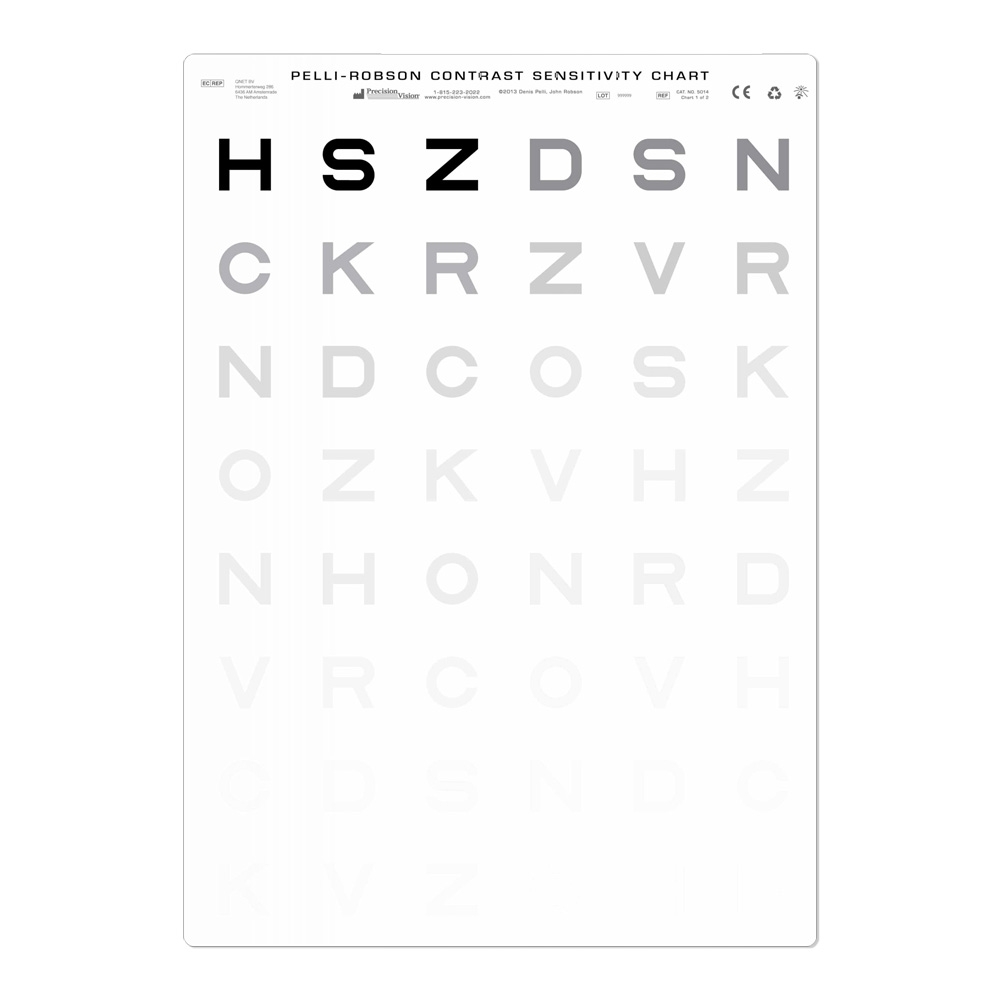
Original Pelli Robson Contrast Sensitivity Chart Sloan Optotypes 1m Testing
What is a Contrast Sensitivity Eye Chart?
A contrast sensitivity eye chart is a specialized tool used to measure the ability to distinguish between different levels of contrast. It’s an essential component of a comprehensive eye exam, as it helps eye care professionals diagnose and monitor various eye conditions, such as cataracts, glaucoma, and age-related macular degeneration. By using a contrast sensitivity eye chart, you can identify any deficiencies in your contrast sensitivity, which can be an early indicator of underlying eye problems.
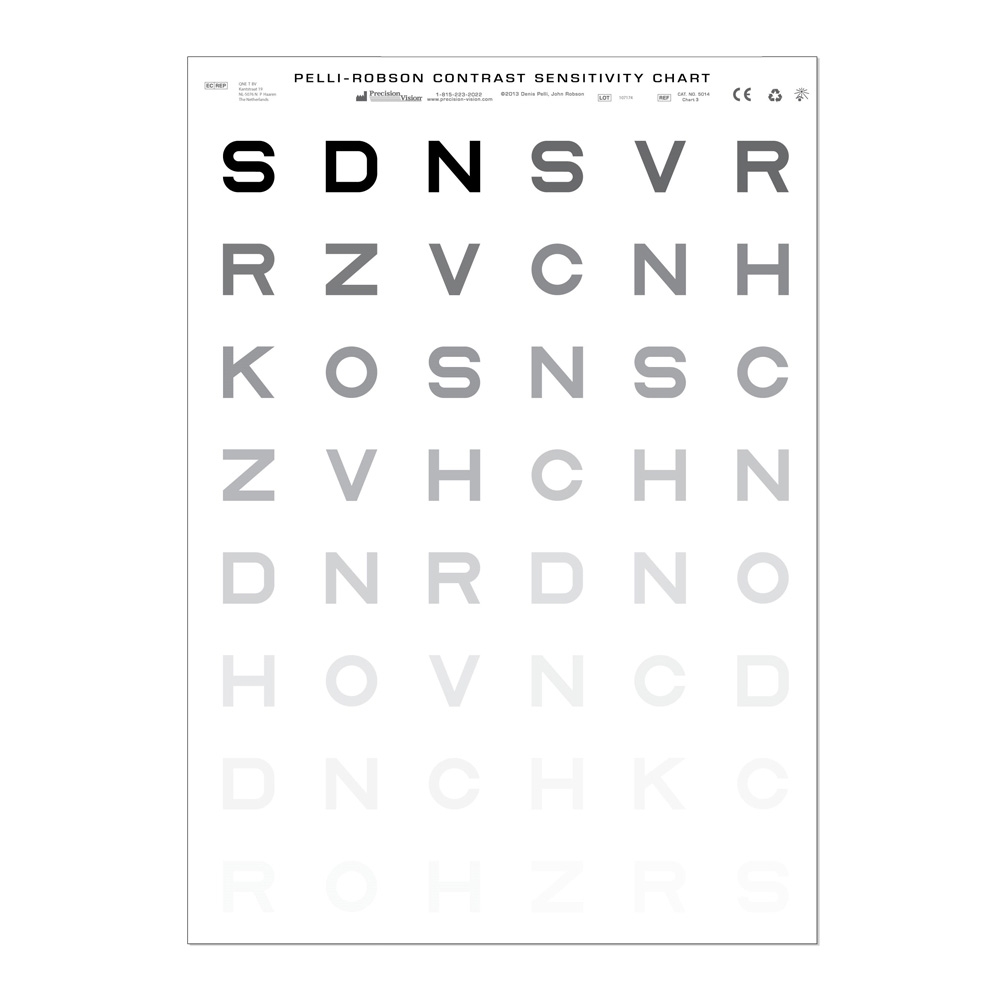
Original Pelli Robson Contrast Sensitivity Chart Sloan Optotypes 1m Testing
How to Use a Printable Contrast Sensitivity Eye Chart
Using a printable contrast sensitivity eye chart is relatively straightforward. Start by printing out the chart on high-quality paper, making sure the images are clear and well-defined. Then, find a quiet and well-lit room with minimal distractions. Stand at a distance of about 10-15 feet from the chart and cover one eye. Look at the chart and try to identify the images with varying levels of contrast. Repeat the process with the other eye. By following these simple steps, you can assess your contrast sensitivity and get a better understanding of your eye health.
Benefits of Using a Contrast Sensitivity Eye Chart
The benefits of using a contrast sensitivity eye chart are numerous. For one, it allows you to monitor your eye health regularly, which can help identify potential issues early on. This can be especially useful for people who are at risk of developing eye conditions, such as those with a family history of eye disease. Additionally, a contrast sensitivity eye chart can help you track any changes in your vision over time, allowing you to adjust your lifestyle and habits accordingly. By prioritizing your eye health, you can reduce the risk of developing serious eye problems and maintain good vision for years to come.
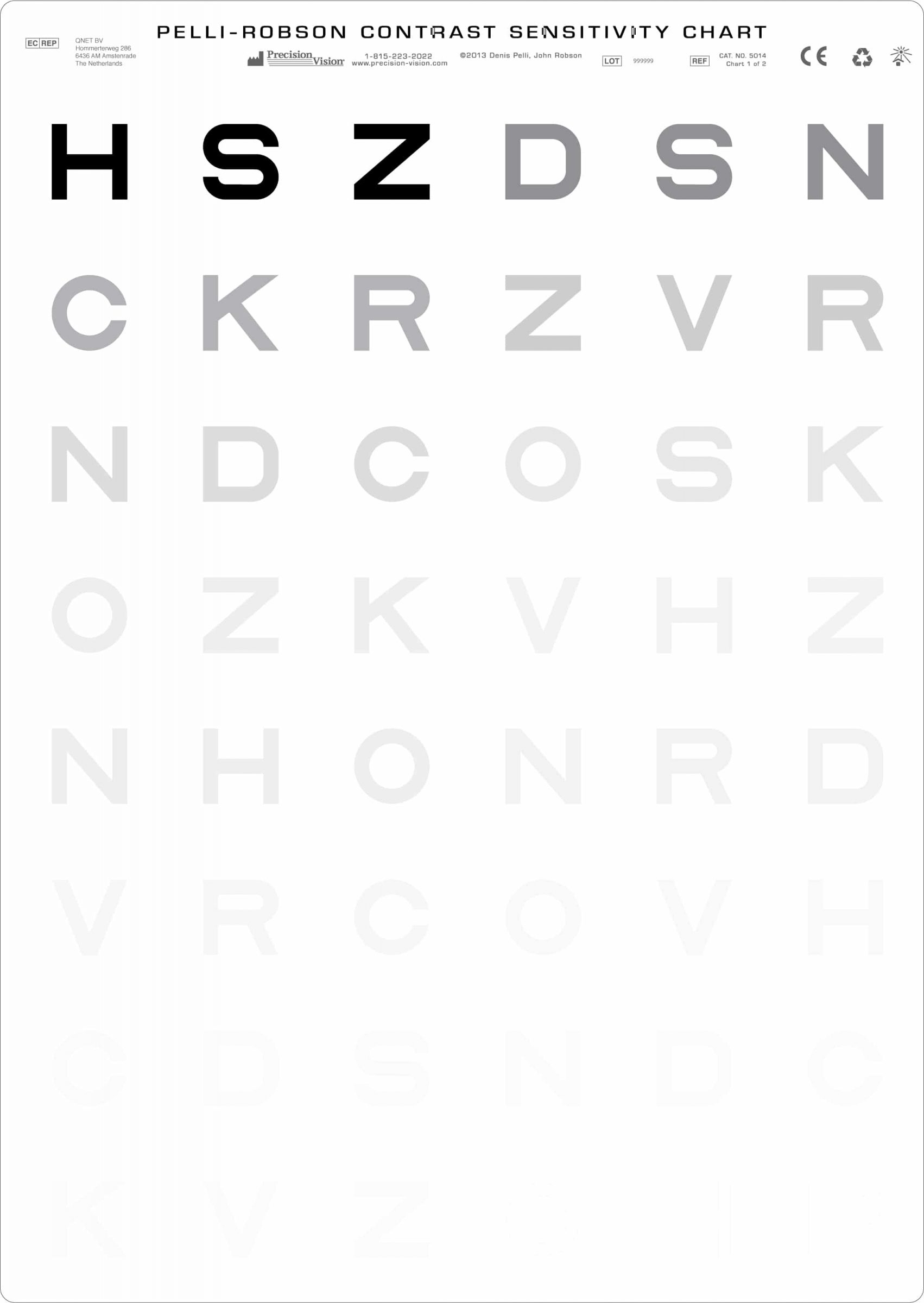
Pelli Robson Contrast Sensitivity Chart Precision Vision
In conclusion, a printable contrast sensitivity eye chart is a valuable tool for anyone looking to assess and improve their eye health. By downloading and printing out a chart, you can perform a simple vision test and get a better understanding of your contrast sensitivity. Remember to use the chart regularly to monitor any changes in your vision and consult with an eye care professional if you have any concerns. With a contrast sensitivity eye chart, you can take the first step towards maintaining good eye health and enjoying clear vision for years to come.
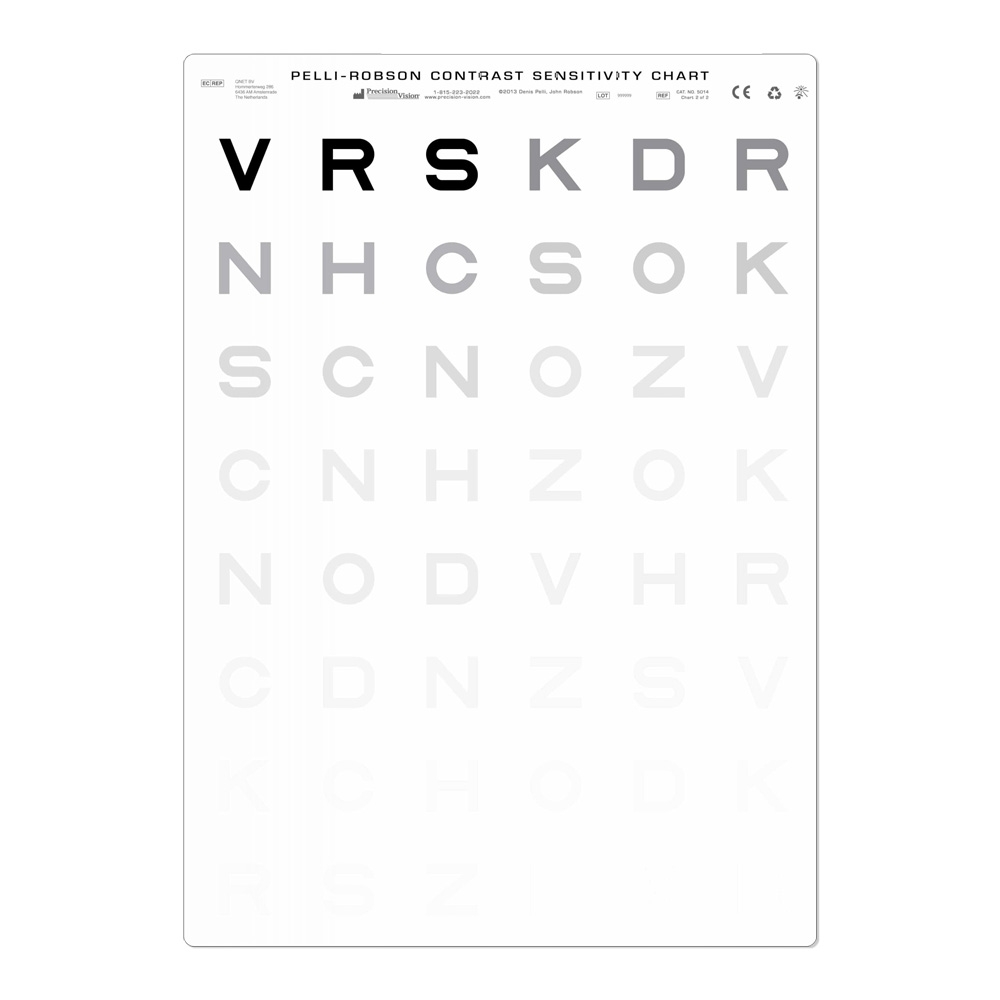
Original Pelli Robson Contrast Sensitivity Chart Sloan Optotypes 1m Testing
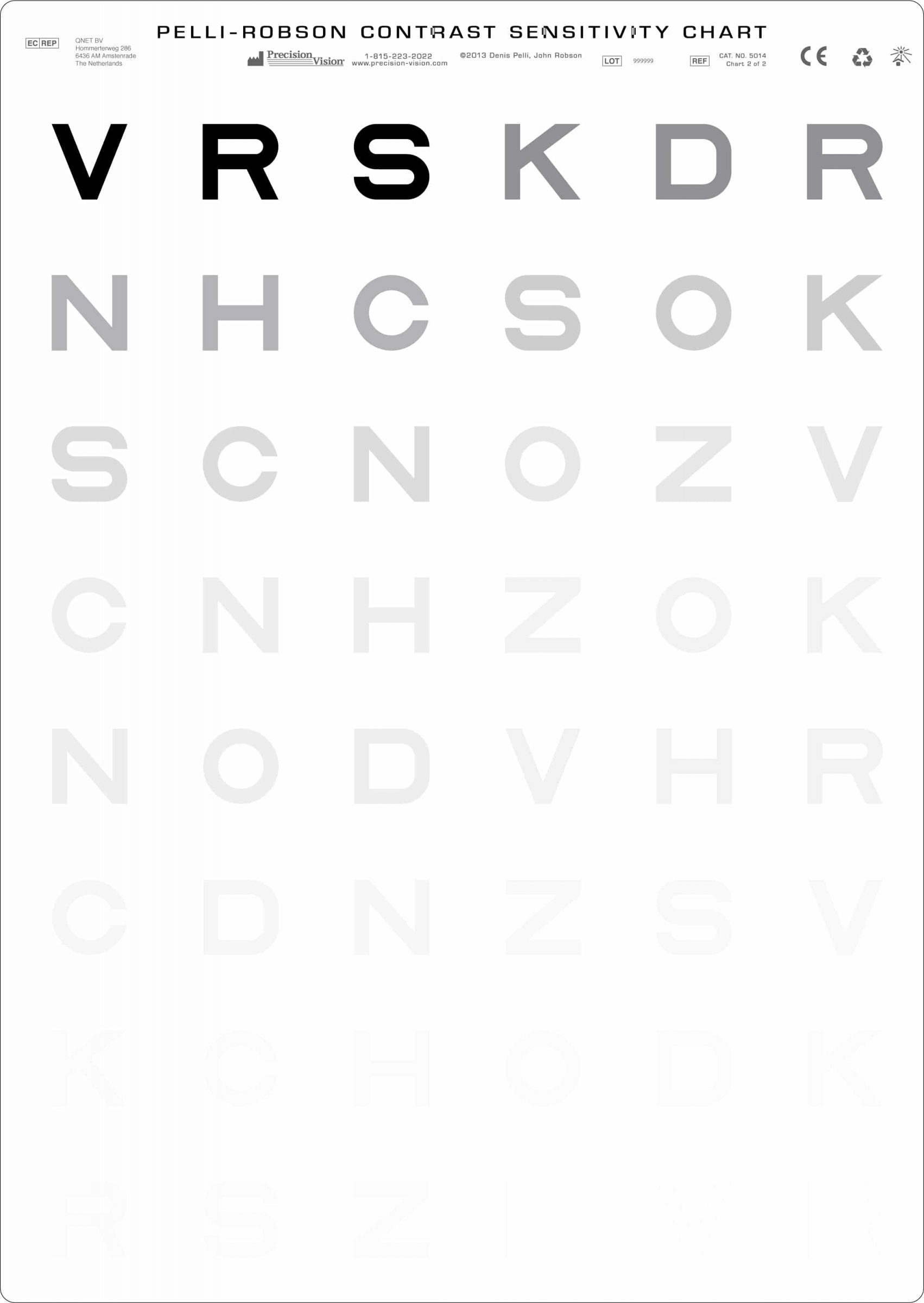
Pelli Robson Contrast Sensitivity Chart Precision Vision